PERCUSSION ENSEMBLE MUSIC
Contemporary Music for Percussion Ensemble
Percussion ensemble music is one of the most vibrant and innovative areas of contemporary composition. With its vast range of instruments, colors, and rhythmic possibilities, the medium invites bold experimentation and expressive freedom. This page presents Lior Navok’s work for percussion ensemble alongside a curated selection of modern repertoire, offering performers and directors a resource for exploring new music for multiple percussionists.
SIGNALS
for percussion ensemble and piano
Duration:
11 minutes
Instrumentation:
Percussion Ensemble (4 players) and piano / celeste (one player)
Year Composed:
2017
Written For:
Frank Epstein
Premiere Performance:
New England Conservatory Percussion Ensemble
Frank Epstein, conductor
22 April 2018
Boston, MA, USA

About Signals
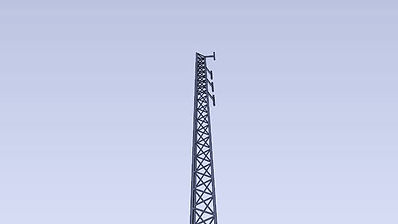
Signals is an 11‑minute work for four percussionists and piano/celeste, written during a stay in Berlin and dedicated to Frank Epstein and the New England Conservatory Percussion Ensemble. The piece was inspired by the distant antenna seen from a tenth‑floor window — a quiet, imagined exchange of signals across space. The music unfolds as a sequence of shifting pulses, colors, and resonances, exploring the full sonic range of the percussion ensemble. Delicate textures, shimmering layers, and powerful unisons create a landscape that moves between intimacy and intensity, shaped by the interplay between percussion and the piano/celeste.
For the Performers
Level: For advanced university ensembles and professional percussion groups comfortable with contemporary techniques, color‑driven writing, and precise ensemble coordination.
Programming: Well suited for contemporary percussion concerts, mixed‑ensemble programs, or events highlighting color, rhythm, and spatial imagination.
Program Notes
Signals for four percussionists and piano/celeste was written during a one-week stay in Berlin. From my window on the 10th floor, I could see, through a mild fog, the red light of a distant antenna. The imagined communication between me and the signals of this antenna is the inspiration for this work.
Signals is dedicated to Frank Epstein and the NEC Percussion Ensemble.


About Percussion Ensemble Music
Percussion ensemble music has become one of the most dynamic forces in contemporary classical composition. With its limitless palette of instruments — drums, metals, woods, keyboards, found objects, and more — the ensemble offers composers extraordinary freedom to explore rhythm, color, and texture. Modern works often incorporate extended techniques, theatrical elements, and spatial effects, making the medium ideal for both concert performance and educational settings. These compositions contribute to the expanding repertoire for percussion ensemble, providing performers with technically engaging and artistically compelling music.
Contemporary Percussion Ensemble Repertoire List
Edgard Varèse — Ionisation (1931)
Widely considered the most important work in the history of the genre, it was the first concert piece written exclusively for a large percussion ensemble (13 players), legitimizing percussion as a primary medium for Western art music.
John Cage — Third Construction (1941)
A landmark work of the "Early Percussion" movement. Cage used unconventional instruments (tin cans, conch shells) and complex rhythmic structures, setting the stage for experimental percussion music.
Carlos Chávez — Toccata (1942)
A seminal three-movement work that remains a staple of core repertoire. It is celebrated for its virtuosic treatment of traditional and Latin American instruments, bridging the gap between orchestral percussion and the standalone ensemble.
Iannis Xenakis — Persephassa (1969)
A massive, spatial work for six percussionists stationed around the audience. It is a critical milestone for its use of mathematical complexity and for redefining the physical relationship between performers and listeners.
Steve Reich — Drumming (1971)
A seminal minimalist masterpiece. This work fundamentally changed the direction of contemporary music by exploring "phasing" and rhythmic repetition, becoming one of the most performed and studied works of the 20th century.
Minoru Miki — Marimba Spiritual (1984)
A core modern standard that blends traditional Japanese aesthetics with Western contemporary percussion. It is frequently used as a benchmark for high-level ensemble performance and marimba virtuosity.
Christopher Rouse — Ogoun Badagris (1976)
An essential staple of the academic repertoire. This quintet is renowned for its intense energy and complex interlocking rhythms derived from Haitian voodoo rituals.
Jennifer Higdon — Splendid Wood (2006)
A major addition to the modern mallet ensemble repertoire. It has quickly become a standard for large-scale marimba ensembles, known for its vibrant colors and driving rhythmic interplay.
Paul Lansky — Threads (2005)
A critical 21st-century quartet that serves as a modern classic. It is highly regarded for its structural elegance and for organizing percussion sound into "threads" of wood, metal, and skin.
Andy Akiho — Cartograph (2023)
A leading contemporary work for 2026. It represents the "new standard" in technical complexity and is currently featured as a required piece for top-tier international competitions.
Lior Navok — Signals (2017)
A significant contemporary work for percussion quartet and piano/celesta. It is highly valued in the repertoire for its sophisticated exploration of color and resonance, using the piano as an equal partner to create a dense, shimmering landscape of sound.